The Quick Commerce Industry in India Is a Glorified Ponzi Scheme
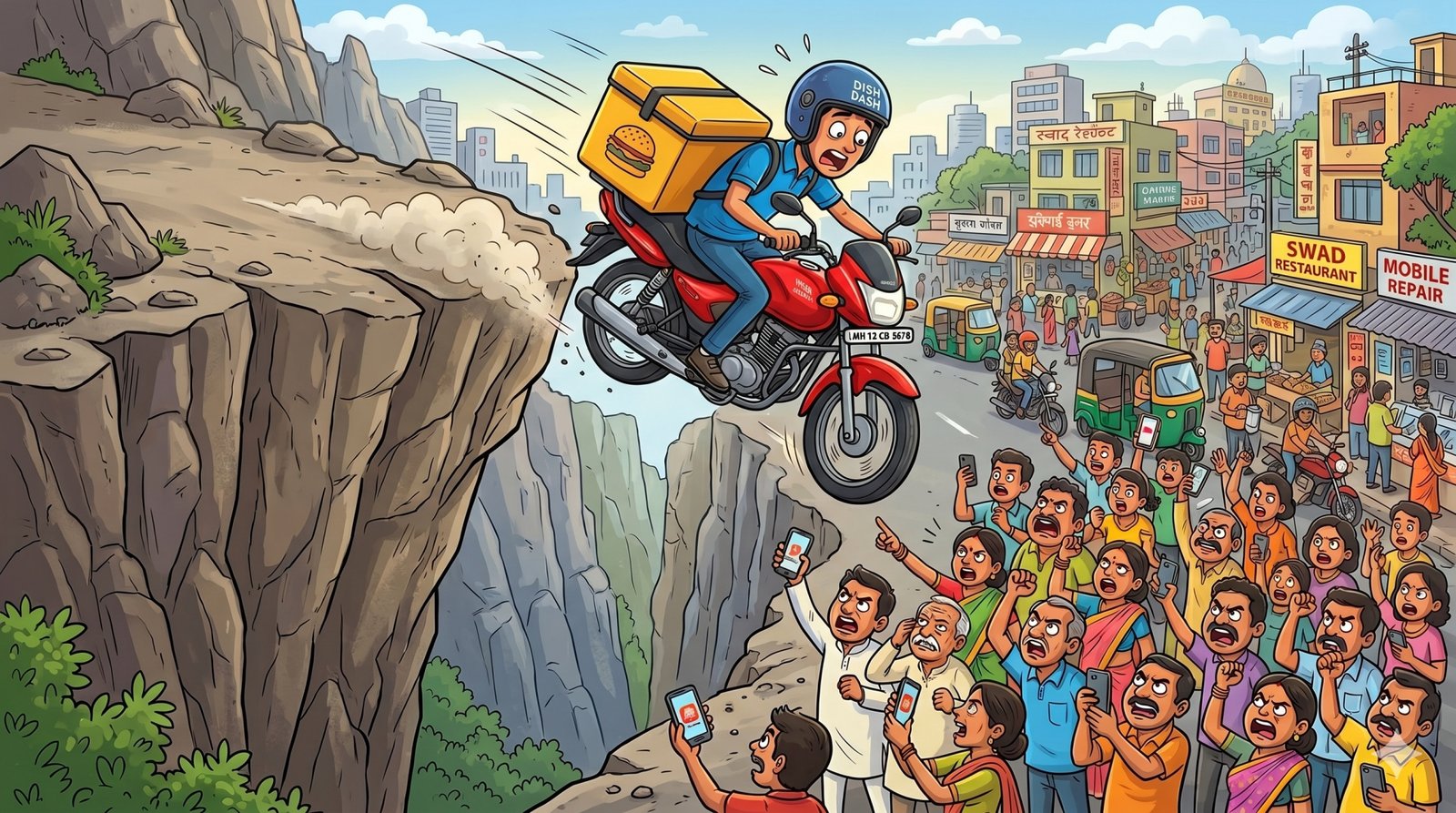
This is a post I promised to write and publish for a while now. I’ll admit, I had a great time researching and writing this, but I am also more worried than before for gig workers and consumers after this.
Quick commerce in India sells you a dream: 10-minute delivery, groceries at your doorstep, and a shopping experience that feels like magic. But behind the glossy ads and big tech names (and arrogant CEO’s), the reality is far less glamorous and a lot dirtier. The industry is a high-speed race for capital, not a proven business model. Hence, a giant, glorified ponzi scheme.
The question is no longer whether quick commerce works for customers. The real question is: Why are companies like Eternal, Swiggy, Amazon, Flipkart, and Zepto pouring crores of rupees into a sector that still lacks clear profitability? The answer is simple – and I can confirm this after doing the research – they are betting on a land grab, not on sustainable economics.
Quick Commerce in India: From Idea to Obsession
Quick commerce started as a niche experiment. It began in dense urban pockets where delivery routes were short and demand for groceries was high. The goal was simple: deliver essentials faster than any local kirana store could. Dark stores became more commonplace.
Then the pandemic hit. India was already primed for digital adoption with UPI, cheap smartphones, and slightly more affordable internet. Suddenly, home delivery moved from a convenience to a necessity. Quick commerce rode that wave and exploded.
What started as a small urban service became a full-blown category war. Companies realised that whoever wins quick commerce captures daily customer habits. That is why the sector has become obsessive: it is not just about selling products. It is about owning the customer’s attention every single day.
The Money Is Burning Faster Than Revenue
The amount of capital flowing into quick commerce over the last two years is staggering. Eternal has made Blinkit a core growth pillar. Swiggy keeps expanding Instamart into new cities and dark stores. Zepto has raised massive funding rounds to fuel growth. Flipkart launched Minutes, while Amazon has poured over ₹2,000 crore into India’s logistics and commerce infrastructure.
Just keeping track of my TWITI episodes, you’ll see a bit of quick commerce news or updates in almost every week.
The problem is this: the money is flowing in faster than the business can prove it works.
Companies are spending heavily on dark stores, logistics, discounts, and customer acquisition. But profitability remains elusive. Revenue is growing, but losses are still high. That is why the sector looks suspicious to many investors and analysts. It is growth at any cost, not growth with discipline.
The Profitability Myth
Saying it plainly: quick commerce is not profitable. Most companies are still losing money on every order or struggling to make the math work.
Swiggy has reported record losses as Instamart expands. Zepto’s losses widened to over ₹3,300 crore in FY25 while sales grew. Even Eternal, where Blinkit is a major driver, shows profit volatility when you look at quarterly results.
The betting is that scale will eventually solve everything. But scale can also mean bigger losses if the cost per order stays high. A company can grow fast and still remain fundamentally broken underneath.
Customers Are Tired of Broken Promises
The marketing promises 10-minute delivery. The reality is often late orders, unavailable items, and patchy service. Customers are increasingly frustrated.
One common complaint is that the 10-minute promise is rarely met. Orders arrive late during peak hours, bad weather, or when demand spikes. Another complaint is that quick commerce is unavailable in many areas. Most of the coverage is still limited to wealthy urban pockets.
There are also complaints about higher prices compared to local stores, frequent product substitutions, and app glitches that make the experience frustrating. The gap between marketing and reality is widening, and customers are starting to notice.
The Human Cost: Gig Workers Bearing the Brunt
The quick commerce model depends on speed, and that speed comes at a human cost. Delivery riders are the backbone of the system, but they face intense pressure to meet tight deadlines. The business model pushes urgency down to the worker level.
Workers regularly face unstable pay, inconsistent incentives, and long hours. As the industry expands, so do concerns about job security and working conditions. That is why gig worker strikes are becoming more common. They are not just complaints about pay. They are a signal that the model is unsustainable for the people who make it work.
Government Warnings Are Being Ignored
The government has raised concerns about aggressive marketing claims, including the 10-minute delivery promise. In some cases, authorities have advised companies to tone down or drop these claims because they are not operationally realistic.
But many companies have ignored or downplayed these warnings. They keep pushing the same aggressive marketing because that is what sells. The problem is that this creates a credibility gap. Customers want speed, but they also want honesty.
When marketing promises are consistently missed, the entire category loses trust. That is a dangerous position for an industry that relies on repeat usage.
Why the “Ponzi” Label Is Hard to Ignore
Quick commerce is not a Ponzi scheme in the legal sense. It is a real business with real customers, real inventory, and real delivery networks. But the comparison keeps coming up for a reason.
The industry feels dependent on fresh capital to keep the engine running. If companies must keep raising money to fund expansion, discounts, and operations before reaching profitability, the model looks fragile. That is the core of the criticism: the business might not survive without constant external fuel.
The Bottom Line for India
Quick commerce is here to stay. It fits India’s digital habits, and consumers like the convenience. But the industry has a serious problem: growth does not equal strength. A category can be popular and still be economically broken.
For the Indian tech industry, quick commerce is a test case. It will show whether a consumer habit built on speed can evolve into a sustainable business. Or whether it remains a costly race that only works while the money keeps flowing.
If companies cannot answer the profitability question soon, the industry risks becoming a cautionary tale. The real test is not whether you can deliver in 10 minutes. The real test is whether you can deliver a profit.
Final Thought
I believe in reporting on technology that actually matters. Quick commerce is a great example of what happens when growth becomes an obsession and profitability becomes an afterthought. The question is: will investors and companies wake up before the entire model collapses?
If you found this post useful, share it with friends who use quick commerce daily. Ask them: is the convenience worth the cost?
Leave a Reply