
 By Erick
 Still thinking about the five LLMs launched at the India AI summit not long ago. If you missed it, I extracted this from my This Week in Tech India (TWITI) episode for you:
But a lot of you are asking what really is an LLM? And why is it such a big deal, especially in these times? Read on for the simplest explanation.
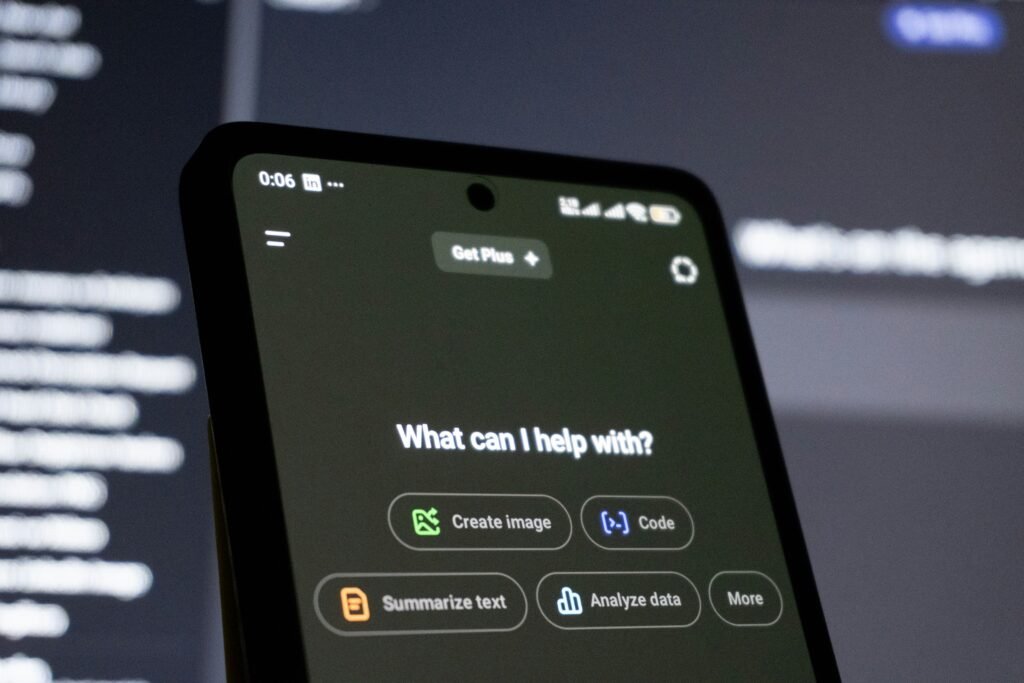
The Definition
Well, a Large Language Model (LLM) is a type of AI trained on massive datasets to understand, summarize, generate, and predict human-like text and code.
My favourite definition of an LLM however is from elastic.co which is “At its core, a large language model (LLM) is a model trained using deep learning algorithms and capable of a broad range of natural language processing (NLP) tasks, such as sentiment analysis, conversational question answering, text translation, classification, and generation.”
These models analyze patterns in data to predict the next word in a sequence, enabling applications like chatbots, translation, and content creation.
Basically, ChatGPT is an LLM. So is Claude, and Gemini, and so on. They have been trained on humungous amounts of data (including in some cases literal physical books) and initially understand relationships between words.
At a very simplistic level, they function by predicting the next most probable word or token in a sequence. eyond text, advanced LLMs can handle multimodal tasks, including image, audio, and video processing.
Think of it as an advanced prediction engine. When you give it a prompt, it doesn’t “know” facts like a person does; instead, it uses statistical patterns learned during training to guess the most likely next word in a sequence.
Parameters
Large language models also have large numbers of parameters, which are like memories the model collects as it learns from training. Think of these parameters as the model’s knowledge bank.
Large language models must be pretrained and then fine-tuned to solve text classification, question answering, document summarization, text generation problems, and other tasks. Their problem-solving capabilities can be applied to fields like healthcare, finance, and entertainment, and AI cat videos and others.
Common use cases so far are content generation, conversational, coding, and in the case of US Government surveillance and mass destruction.
LLMs are made through three broad steps:
- Pre-training: The model reads a massive dataset (the “entire internet”) to learn the basic rules of grammar, facts about the world, and even some reasoning abilities.
- Fine-tuning: The “base” model is then trained on a smaller, more specific dataset to follow instructions better or to gain expertise in a field like medicine or law.
- Alignment (RLHF): Humans review and rank the model’s answers, teaching it to be more helpful, safe, and honest.
Why A Sovereign AI is A Big Deal
And India launched five of them in a week. This is us essentially creating our own “national intelligence” rather than relying on a “borrowed brain” from a foreign tech giant like OpenAI (which the Pentagon now apparently relies on).
Specifically, these are the reasons why the Government set home-grown sovereign LLM as a focus of the India AI Mission:
1. Data Sovereignty and National Security
- Keeping Data Local: Relying on foreign LLMs means sensitive government, military, or citizen data often leaves the country for processing. An in-house model ensures this data stays within national borders and under local laws.
- Reducing Vulnerability: Dependence on a foreign entity is a risk. If a provider cuts off access due to geopolitical shifts, a country without its own model has no “backup” and loses critical infrastructure overnight.
- Intelligence and Defense: National models can be tailored for high-stakes tasks like intelligence analysis, military planning, and cybersecurity without exposing secrets to third-party providers.
2. Cultural and Linguistic Relevance
- Beyond English: Most global models are trained primarily on English-centric data, which can lead to biases or a poor understanding of local dialects and cultural nuances. This is one area we excel – for example BharatGen or Gnani.ai
- Preserving Identity: Indigenous LLMs are designed to respect and promote local languages, including those at risk of extinction. For example, our own BharatGen project and the UAE’s Falcon models focus on accurately capturing regional languages and cultural codes.
3. Economic and Strategic Autonomy
- Innovation Catalyst: Building a model creates a local ecosystem of AI startups, researchers, and engineers. It transforms a country from a “taker” (passive user) to a “maker” (active developer) in the global tech race.
- Avoiding Vendor Lock-in: In-house models prevent a country from being trapped by the pricing hikes or service changes of a single foreign company.
- Setting Global Standards: Countries with their own AI capabilities have more leverage to influence international AI laws and ethics, rather than just following rules set by others.
4. Public Interest and Ethics
- Aligned Values: A national model can be trained to reflect the specific ethical, religious, and social values of that nation, which foreign models might ignore or contradict.
- Inclusive Services: Governments use these models to make public services—like healthcare advice or legal guidance—more accessible to citizens who don’t speak English or have high digital literacy.
Downside: Massive Costs
Like all AI, building a LLM is very capital intensive.
The data is there – practically the ‘entire internet’ to train the model. But there’s the specialized chips (GPUs) which are the primary cost of an LLM. These chips are required to process trillions of data points. And this is where NVIDIA makes a killing – each of their H100 (80GB) chips costs upwards of $25,000.
Then there’s the data centre – the physical facility to host the chips. Costs vary, but you can expect the HVAC (cooling) system itself to cost a bomb.
And of course there’s operating costs – electricity, training runs, and maintenance. And salaries.
What’s cool is, the Indian AI models cost far, far less than ChatGPT or Claude to build. But so did DeepSeek and the other Chinese models.