
 By Erick
 Okay, I made a satirical… skit about good old Narayan Murthy re-emphasising his belief that we should all work 72 hours a week. You can watch it here (and while you’re at it, subscribe too). The feedback has been tremendous and I’m definitely going to do more skits!
Some folks however have attacked me saying things like I’m encouraging the youth to be lazy and things like that. I get it – we’ve long been programmed to think that overworking is the key to success, and this is exacerbated by managers constantly glorifying staying 12 to 14 hours in office for no extra pay. Trust me, I have been there more than I’d like to admit, across multiple jobs. And I will put my hand on my heart and say that working more than 40 hours a week for no extra money is simply not worth it. If you have a problem with that, go comment on my YouTube video. I will respond, I promise.
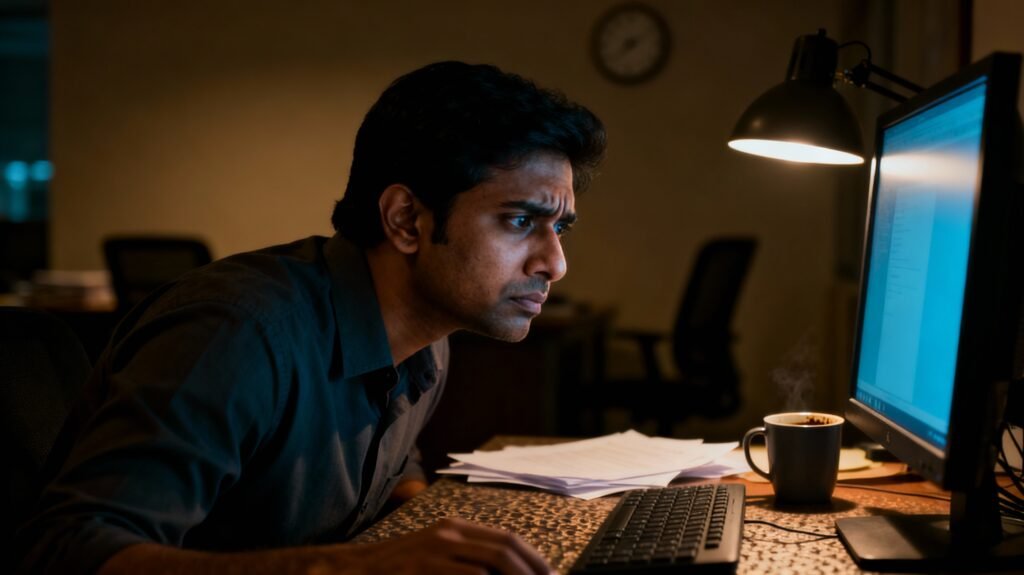
There’s also reporting that Cognizant is now going to monitor whether an employee has been ‘idle’ for 15 minutes or more – by monitoring mouse activity. An employee will be marked “idle” if there is no keyboard or mouse activity for more than 300 seconds (5 minutes) in Cognizant’s new monitoring system. My favorite reaction to this is one user posting that all you need to do is keep your mouse on your analog watch and just get on with your life. Genius.

Sigh. It’s hard to decide which among Infosys, TCS or Cognizant I dislike more. Please let’s never have such companies created, ever again.
Now here’s some good news from Tech India this week:
- India has recently conducted large-scale repatriation operations to bring back its citizens who were trapped in scam centers in Myanmar, particularly in the notorious KK Park complex in Myawaddy near the Thai border.
- Following a military raid by Myanmar on this cybercrime hub in October 2025, over 2,000 arrests were made and many scam operations were disrupted. Hundreds of Indian nationals escaped across the border into Thailand. India has flown back about 270 of these individuals on special Indian Air Force flights and repatriated additional batches, including 125 more from Thailand.
- Recruiters based in India, including some arrested in Delhi and other states, facilitated this trafficking by sending unsuspecting victims through illegal routes via Kolkata and Bangkok into Myanmar. Many victims had to pay large sums to these recruiters under the guise of legitimate employment offers. These Indians had been lured with promises of high-paying jobs but were held captive, threatened, and forced to participate in online fraud schemes.
- Upon reaching Myanmar, the victims were confined in scam compounds where they were forced to work long hours running various online fraud schemes like cryptocurrency frauds, digital arrest scams targeting foreigners, and romance scams. They were closely monitored, had their passports and phones seized, and faced physical punishments if they resisted. The traffickers operated transnational cybercrime rackets exploiting weak law enforcement and the chaotic political situation in the Myanmar border region. Indian police and cybercrime teams are investigating these recruiters and the wider trafficking syndicates to prevent further exploitation.
- The returnees are being questioned as witnesses to help identify the wider recruitment and trafficking networks involved. This operation is part of a broader effort to rescue Indians trapped in illegal scam centers in Southeast Asia, with over 1,500 Indians repatriated since March 2025 alone through Thailand.
- Eternal founder Deepinder Goyal is exploring the launch of a new wearable device company called Temple.
- The company aims to focus primarily on wearable devices that monitor brain health, specifically measuring brain blood flow continuously. This initiative is linked to Goyal’s biological research initiative Continue Research, which has proposed the Gravity Ageing Hypothesis — the idea that gravity’s lifelong pull on blood circulation in the brain may contribute to human aging.
- The device seen being worn by Goyal near his temple is an experimental sensor initially developed for research purposes to calculate brain blood flow accurately and in real time. While the device is currently supplied only to research institutes, Temple is expected to eventually commercialize it for consumer use. Goyal describes Temple as a “small, cute company,” something much smaller and more focused than Eternal. The company website currently displays a “Coming Soon” message with no specific launch date yet.
- Even if the Gravity Ageing Hypothesis does not prove accurate, Goyal notes the device could still be relevant because brain blood flow is already an accepted biomarker for aging, longevity, and cognition. Thus, Temple could become a meaningful wellness or medical device in the future, helping users monitor brain health continuously.
- Arattai, the homegrown messaging app from Zoho, has recently rolled out end-to-end encryption (E2EE) for individual chats. Btw, more of my friends are now on Arattai and it is now officially my favorite chat app. And no, they are not sponsoring me or my content.
- This means all one-on-one conversations on Arattai are now encrypted on the user’s device before being sent, and only the sender and receiver can read the messages. Even Arattai itself cannot access these chats. To use E2EE, both users in the chat need to update to the latest app versions (Android v1.33.6, iOS v1.17.23, Desktop v1.0.7). When enabled, the app creates a new encrypted chat session, archiving the old non-encrypted conversations, which become read-only. Users will see a shield icon indicating a chat is encrypted. Group chats and encrypted chat backups are planned to get this feature soon, with backups expected within about two weeks.
- This update marks a significant privacy enhancement for Arattai, similar to encryption standards used by WhatsApp and Signal. There is a transition period of three days during which users with older app versions can still use non-encrypted chats; after that, encryption becomes mandatory system-wide.
- Azimuth AI and Cyient Semiconductors have jointly launched ARKA GKT-1, India’s first-generation intelligent-power platform-on-a-chip powered by in-house developed intellectual property (IP). I love me a good home-grown chip; y’all know how excited I get about made in India semiconductors!
- This semiconductor chip is designed for high-efficiency edge AI and smart energy applications. It integrates multi-core custom computing, advanced analog sensing, memory, and intelligent power management into a single, highly energy-efficient system on a chip.
- The ARKA GKT-1 is tailored for use cases such as smart utilities, advanced metering, battery management, smart cities, and industrial automation. It brings real-time intelligence to the edge while maintaining low power consumption. The platform is based on Azimuth AI’s Software-Defined Silicon architecture and Cyient Semiconductors’ expertise in mixed-signal, power, and low-energy ASIC design. The chip supports both domestic and global markets.
- The launch of ARKA GKT-1 marks a significant milestone in India’s push for semiconductor self-reliance and semiconductor design innovation, underlining the goal to be a leader in next-generation chip technologies. Union Minister for Electronics and IT Ashwini Vaishnaw unveiled the chip, highlighting it as a demonstration of India’s capability to design world-class semiconductor technologies critical to global industries.
- The chip is planned for commercialization by the end of 2026.
- Zepto has launched “Super Mall,” a large order format vertical focused on higher-value and non-grocery items such as apparel, home appliances, kitchenware, and home décor.
- Zepto is currently rolling out this offering to all users as part of its strategy to increase order sizes and compete directly with rival services like Swiggy’s Maxxsaver.
- This launch marks Zepto’s second attempt at the large order format after a previous similar offering was discontinued. Now reintroduced, Super Mall aims to capture greater market share and position Zepto as the leading player in large order quick commerce, especially by targeting premium and non-grocery product categories. Zepto has also expanded into in-app diagnostic services under its pharmacy segment to broaden its portfolio.
- Swiggy’s Maxxsaver, by comparison, offers automatic savings on large grocery orders embedded directly into the shopping experience, encouraging higher-value planned grocery purchases. By contrast, Zepto’s Super Mall focuses more broadly on lifestyle and home products alongside groceries to boost average order values amid stiff competition in India’s quick commerce space.
- Zepto’s expansion into Super Mall and diagnostics aligns with its growth plans, including recent funding rounds and an upcoming IPO filing, aimed at scaling delivery infrastructure and increasing customer retention through diversified offerings.
- Singer Sonu Nigam recently used AI technology to recreate Mohammed Rafi’s voice and performed a live duet with the legendary singer during a concert at Kashmir’s Sher-i-Kashmir International Convocation Complex.
- This event was supposed to emotionally blended nostalgia with innovation, impressing both the live audience and viewers online. I’m sure it did for a lot of people. Not me.
- Sonu Nigam described AI as an assistant tool to aid creativity but emphasized that AI should not replace the human soul in music creation. The performance was notable as it marked the first large-scale concert in the region since the Pahalgam attack and was set against the scenic backdrop of Dal Lake and the Zabarwan Mountains.
- Remember, many years ago Sonu Nigam himself lashed out at autotune.
- Raj Shamani, a prominent Indian content creator and podcaster, has secured a landmark legal victory affirming his copyright and personality rights.
- The Delhi High Court has granted him protection over his face, voice, likeness, and digital content, including his trademarked podcast “Figuring Out.” This ruling prevents unauthorized use, deepfakes, fake endorsements, and misuse of his name and image for commercial gain without his consent. It also confirms his copyright rights over his podcast content under the Copyright Act, providing a strong legal shield against impersonation and unauthorized reproduction of his works.
- This is considered a precedent-setting case in India for protecting digital creators’ intellectual property and personality rights in the AI era.
- The Indian government has implemented four new comprehensive Labour Codes effective from November 21, 2025, replacing 29 older labor laws to streamline and modernize labor regulations. These codes are Code on Wages, Industrial Relations Code, Code on Social Security, and Occupational Safety, Health and Working Conditions (OSHWC) Code.
- These codes cover wages, industrial relations, social security, and occupational safety and health. The new framework introduces universal minimum wages with a national floor, expands social security benefits to gig and platform workers, and allows women to work night shifts across sectors under safety protocols. The reforms aim to simplify compliance through unified registration and reporting systems while promoting formal employment and better worker protections.
- These Labour Codes also emphasize improved workplace safety standards, mandatory health check-ups for older workers, and gender-neutral anti-discrimination measures, including protections for transgender employees. The framework introduces fixed-term employment with benefits and modernizes labor dispute resolution. The government’s approach includes shifting from punitive inspections to an inspector-cum-facilitator model to help ensure compliance.
- Overall, these reforms should create a balanced, modern labor ecosystem designed to empower workers with social security and rights, while fostering ease of doing business in India. This marks one of the most significant labor law overhauls since independence, setting the stage for inclusive and sustainable workforce growth.
- I’d like to start with Amazon – who does not exactly have a good track record – see them commit to these labour codes in FULL and held accountable if not done.
- Indian conversational AI startup CoRover has partnered with American semiconductor company Intel to launch offline BharatGPT Mini, a Sovereign AI solution aimed at enterprises and governments.
- The technology supposedly leverages Intel’s Core Ultra processors and OpenVINO Toolkit to deliver optimized performance, scalability, and security. The partnership appears to align with India’s push for indigenous innovation and self-reliance in technology, aiming to democratize access to AI by supporting 14 Indian languages and enabling deployment in areas with limited internet access.
- BharatGPT Mini is designed to be privacy-first and cloud-independent, serving enterprise and government needs with high efficiency and reliability.
- Rapido has partnered with magicpin (billed as India’s third largest food delivery site) to expand its food delivery platform Ownly beyond Bengaluru and challenge the dominance of Zomato and Swiggy in India.
- Through this partnership, Rapido will gain access to magicpin’s extensive nationwide restaurant network of over 80,000 eateries once onboarding is complete. In return, magicpin will utilize Rapido’s delivery fleet in select locations to enhance its quick delivery service.
- Remember that Ownly currently operates without charging delivery fees or platform fees to attract customers in a market dominated by Zomato and Swiggy.
- This collaboration is part of Rapido’s strategy to scale Ownly rapidly and offer a competitive alternative in the online food delivery space.
- Aerospace manufacturing company Jeh Aerospace has announced the launch of a next-gen manufacturing facility Mach 2 at Horizon Industrial park, Kothur near Hyderabad.
- The new site spans about 200,000 square feet, nearly quadrupling the company’s existing footprint in Hyderabad and bringing its total capacity in the city to more than 250,000 square feet, the company said.
- Designed as a software-defined, AI-powered “future factory,” the facility will integrate autonomous machining, digital twins and closed-loop quality systems, the release notes.
- A US bankruptcy court in Delaware has ordered Byju’s founder, Byju Raveendran, to pay over $1.07 billion in a default judgment related to allegations of misappropriation of funds from Byju’s US-based subsidiary, BYJU’S Alpha.
- The court held Raveendran personally liable for the movement and concealment of $533 million transferred in 2022 and an additional $540.6 million linked to the transfer of the debtor’s interest in Camshaft Capital Fund, a US hedge fund.
- The judgment followed Raveendran’s repeated failure to comply with court orders to appear and provide documents during discovery. As a result, the court imposed this extraordinary relief. While the court ruled that Raveendran owes this amount, it is not payable immediately; creditors must pursue enforcement actions in jurisdictions where his assets are held. Raveendran denied wrongdoing, claiming the judgment was premature and based on misleading information by the lender GLAS Trust, and said he would appeal and submit counterclaims exceeding $2.5 billion alleging racketeering and obstruction of justice.
- The court also directed Raveendran to provide a full accounting of the Alpha Funds and associated proceeds, including all transfers and any remaining funds. This legal saga is part of a broader ongoing dispute involving loans secured by Byju’s Alpha and allegations that funds were diverted beyond creditors’ reach through offshore entities.
- The Reserve Bank of India (RBI) and NPCI International Payments Ltd (NIPL) are in the realization phase of linking India’s Unified Payments Interface (UPI) with the European Central Bank’s TARGET Instant Payment Settlement (TIPS) system.
- This initiative will enable real-time cross-border payments between India and the Euro Area, allowing users to send and receive money instantly. The effort aligns with G20 goals to make cross-border payments cheaper, faster, and more transparent.
- The UPI-TIPS link will go beyond previous arrangements, which allowed only UPI and RuPay acceptance at some European merchants, by establishing a full system-level integration for seamless remittances. Technical integration, settlement flows, risk management, and compliance harmonization are key focus areas as both sides work towards operationalizing this link. This will benefit individuals and businesses by simplifying and speeding up remittances between India and European countries using the Euro currency. RBI and NIPL are collaborating closely with ECB to finalize these arrangements.
- UPI is currently operational in several international markets, allowing Indian users to make seamless payments abroad. These countries include Bhutan, France, Mauritius, Nepal, Singapore, Sri Lanka, and the United Arab Emirates (UAE). Additionally, UPI has been recently linked with Bahrain’s digital payments system for real-time cross-border payments. Plans and discussions are underway for expansions to countries such as Qatar, Malaysia, Cyprus, and some Southeast Asian nations like Thailand. UPI’s integration with Singapore’s PayNow also enables real-time cross-border transactions.
- TCS has partnered with the global investment firm TPG to jointly invest up to INR 18,000 crore (about $2 billion) over the next few years in building AI-focused data centres in India under a new subsidiary called HyperVault.
- TCS will retain a 51% stake in HyperVault, while TPG will invest INR 8,820 crore and hold a stake ranging between 27.5% to 49% depending on investment tranches. The data centres will be designed as high-density, liquid-cooled facilities catering to hyperscalers, large enterprises, AI companies, and government clients, with a planned capacity build-up of about 1.2 gigawatts over five to seven years.
- This partnership marks a strategic shift for TCS, which until now has maintained an asset-light model, as it moves into the capital-intensive AI infrastructure business to meet surging demand for AI compute power and data localization requirements in India.
- Apple India’s Net Profit crosses INR 3,000 crore in 2025. Tariff who?
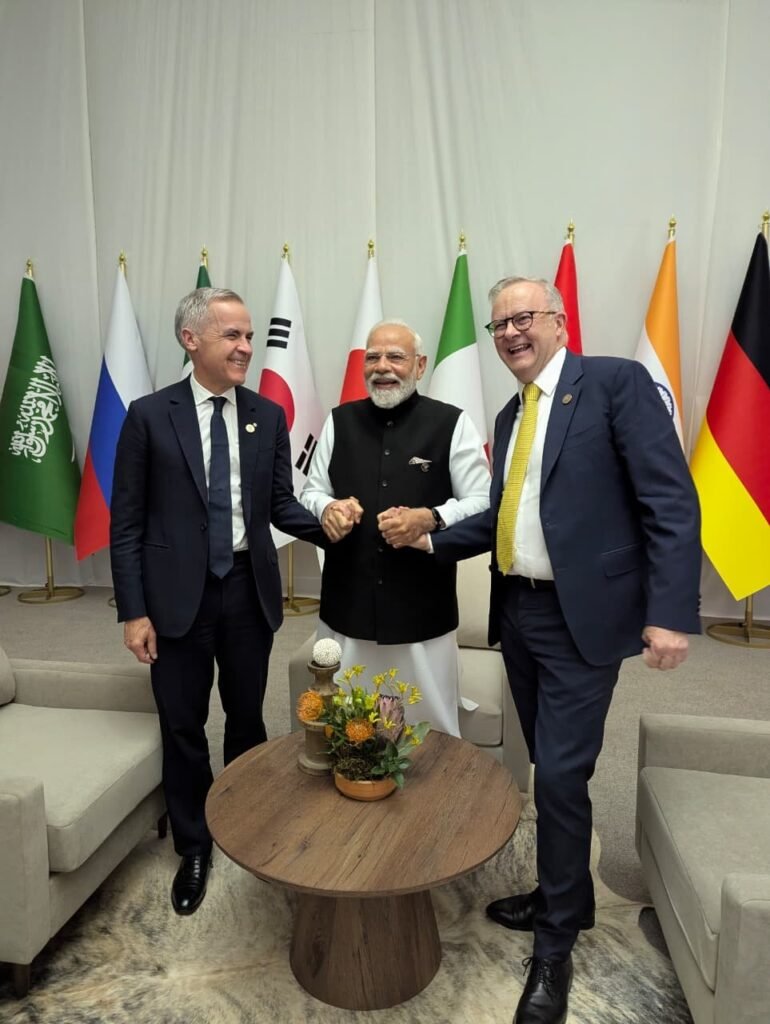
- Prime Minister Narendra Modi announced Australia-Canada-India Technology and Innovation (ACITI) Partnership.
- The initiative will deepen collaboration between democratic partners across three continents and three oceans in emerging technologies, support diversification of supply chains, clean energy and mass adoption of AI. Sure.
In some not-exactly-tech news, Germany based Precision Temperature Measurement Specialist – Lauda, registers a Joint Venture in Pune. Try saying this with a straight face.
That’s it for now, see you next week!