
 By Erick
 It’s an understatement to say that UPI has changed how we pay and transfer money in India. It is fast, simple, and works 24×7.
But how many UPI apps are there in India?
This post explains the types of UPI apps, why the number keeps changing, and maybe how users can pick the right app. Exact counts change often because new apps join and some shut down.
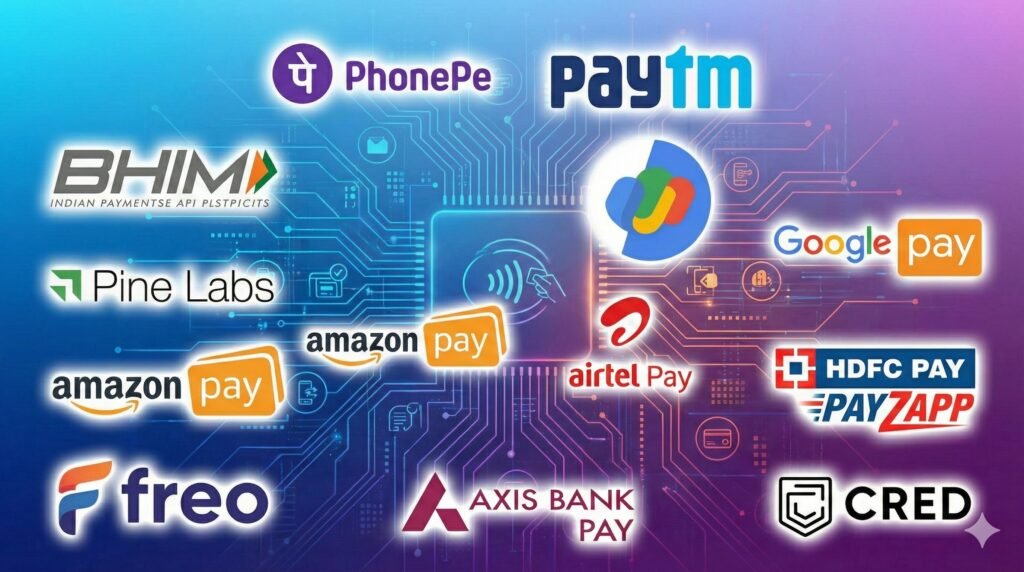
Always check the latest list from official NPCI or bank sources when you need precise numbers.
What Is A UPI App?
A UPI app lets users send and receive money using the Unified Payments Interface.
- You link your bank account to the app.
- You create a UPI ID and UPI PIN.
- You can send money using mobile number, UPI ID, QR code, or bank details.
A UPI app can be:
- A bank’s own mobile banking app.
- A third-party app like PhonePe, Google Pay, Paytm, etc.
- A fintech or merchant app that supports UPI as a payment option.
Why The Exact Number Keeps Changing
People often want a fixed answer like “there are X UPI apps in India.”
In reality, the number is not stable.
- New banks and payment apps get UPI approval from NPCI.
- Some apps merge, rebrand, or close.
- Some apps support UPI only for specific use cases (like IPOs or bill payments).
Because of this, any fixed count becomes outdated quickly. A number that is true this month may be wrong after a few weeks. For accurate, official data, users should rely on updated NPCI or bank communications, not static lists.
Types Of UPI Apps In India
Instead of chasing a single number, it is easier to understand the types of UPI apps in India.
1. Bank Mobile Apps
Almost every major bank in India has its own mobile app with built-in UPI.
- Users can check balance, transfer money, and pay bills in one place.
- The interface is usually basic but tightly integrated with the bank account.
- Security features often include device binding, MPIN, and biometric login.
These apps are ideal for users who like a direct bank-to-bank experience.
2. Third-Party Payment Apps (TPAPs)
These are the popular consumer apps most people know.
- Examples include large wallet and payment apps that support UPI transfers.
- They focus on ease of use, rewards, and offers.
- Users can link accounts from multiple banks in a single app.
These apps often lead the market in terms of daily UPI transaction volumes and user base.
3. Fintech And Niche Apps
Many fintech apps add UPI as a feature inside a broader product.
- Investment apps use UPI for SIPs, mutual funds, and stock payments.
- Neobanks and digital-only banking apps use UPI as a core payment rail.
- Small business platforms add UPI to collect payments from customers.
These apps may not be famous as “UPI apps” but still run on UPI rails.
4. Merchant And Commerce Apps
Large online and offline merchants embed UPI deeply.
- E‑commerce apps give UPI as a payment option at checkout.
- Food delivery, ride-hailing, and travel apps embed UPI pay buttons and intent flows.
- Many show the user’s installed UPI apps and hand over the payment to them.
For users, these feel like one-click UPI flows inside a shopping experience.
How To Find The Latest UPI Apps
Since the list changes, users should know how to find the latest apps that support UPI.
- Check your bank’s official website or app store listing for UPI support details.
- Visit NPCI’s official site for lists of UPI participants (banks and PSPs).
- Look at app store descriptions; most apps clearly mention UPI support and features.
Users should avoid downloading payment apps from unknown sources. They should always use official app stores and verify the publisher.
Key Features To Look For In A UPI App
Instead of worrying about the total number of apps, it is better to focus on what makes an app good.
- Security: App should support PIN, biometric login, and clearly show transaction alerts.
- Reliability: Payments should succeed most of the time, with clear failure messages and refunds.
- Ease of use: Simple interface, clear buttons, and easy way to add or switch bank accounts.
- Support: In‑app help, clear complaint channels, and easy access to reference numbers.
- Extra value: Rewards, bill payment, recharge, auto-pay, and integration with other services.
A user usually needs only one or two solid apps, not every app in the market.
Why India Has So Many UPI Apps
The UPI ecosystem in India has grown very fast.
- UPI is an open, interoperable system, so many banks and fintechs can join.
- Low-cost instant payments make it attractive for both users and merchants.
- Government and regulators encourage digital payments and financial inclusion.
Because of this, more banks, startups, and large platforms keep adding UPI support, making the ecosystem very dense and competitive.
What This Means For Users And Startups
For everyday users:
- You have a lot of choice. Pick apps that are secure, stable, and easy for you.
- You can switch apps anytime because your UPI ID is linked to your bank, not just one app.
For startups and product builders:
- UPI is not just a “feature” but a core rail to build services on top of.
- There is room in niches: SME tools, subscription management, lending, wealth, and more.
- Good UX, trust, and support matter more than being yet another generic UPI app.
In short, India does not just have “many UPI apps.” It has a large, fast-moving UPI ecosystem. Any exact count is only a snapshot, so the focus should be on quality, safety, and use cases rather than raw numbers.