
Here’s What Went Wrong With Byju’s
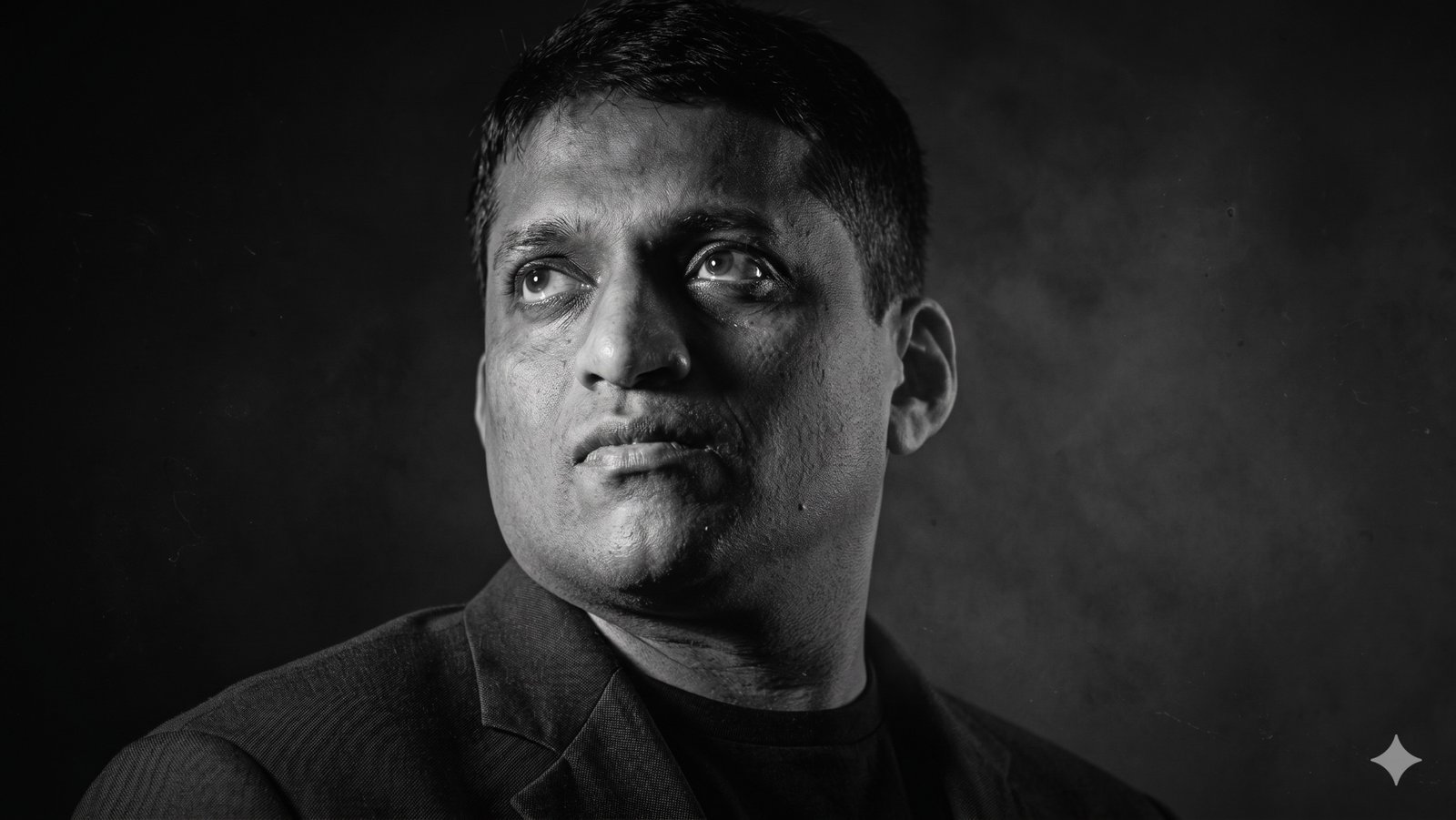
I remember when I was in my second year of college (Loyola College Chennai, for those who did not ask) I got invited to a free talk given by Byju Raveendran himself who was demonstrating how his math coaching would better prepare kids like me excel in the CAT, GMAT, XAT and other MBA entrance exams. I got bored and walked out in 30 minutes. I didn’t do MBA at all eventually, but that’s not because I walked out of this free seminar.
At that time itself (we’re talking about the year 2009) Byju was a bit of a myth – he was known to give five coaching sessions across four cities during five days a week. Then, fairly rapidly, “Byju’s” became a behemoth in the edtech space. Even sponsoring the IPL at its peak for three years (2020-2022).
In just over a decade, Byju went from being a small-town math teacher to becoming the founder of India’s most valuable startup, worth $22 billion. Today, that same company faces insolvency, and Byju faces criminal charges and a prison sentence. It’s worth looking at Byju’s story from rags to riches and rags again, because there’s something in this for everyone – not just edtech startups.
Early Life: A Child from Kannur
Byju Raveendran was born on January 5, 1980, in Azhikode, a small village in Kannur district, Kerala. His parents were both teachers—his father taught physics and his mother taught mathematics. Despite having educated parents, Byju was not a serious student in his early years.
He attended a Malayalam-medium school where he showed more interest in sports than in studies. He would skip classes regularly to play football, cricket, and five other sports. His teachers tolerated this behavior, and his family supported his passion for athletics.
The Turning Point in Engineering College
After school, Byju chose engineering over medicine because medical studies left no time for sports. He completed his B.Tech in Mechanical Engineering from Government College of Engineering, Kannur. After graduation, he joined a multinational shipping company as a service engineer—a stable, high-paying job that most people would consider a successful career.
The CAT Exam That Changed Everything
In 2003, during a vacation, Byju helped his friends prepare for the CAT (Common Admission Test)—the (very annoying) entrance exam for India’s prestigious Indian Institutes of Management (IIMs). His friends encouraged him to take the exam himself despite no formal preparation.
The result shocked everyone: Byju scored 99 percentile without studying. Students began seeking his guidance for CAT preparation. Curious whether his first success was luck or skill, Byju took the CAT exam again and scored 100 percentile, receiving calls from multiple IIMs.
He didn’t join any IIM because he didn’t want to pursue an MBA. Instead, he realized he had a natural gift for teaching.
Starting Byju’s Classes (2007)
In 2007, Byju resigned from his high-paying job and started teaching CAT preparation on the terrace of a friend’s home in Bangalore. He offered free coaching for one week to attract students. His interactive teaching style—where he made complex math concepts simple and engaging—quickly built a reputation.
His classes grew from a small terrace to stadium-size venues. By 2009, he had launched an online video-based learning program for CAT.
The Official Company Launch
In 2011, Byju Raveendran co-founded Think & Learn Pvt. Ltd. with his wife Divya Gokulnath. Divya had been one of Byju’s students (she joined his GRE classes), and they married in 2009. She became his business partner, handling curriculum development, PR, media relations, and content.
The company’s tagline was “fall in love with learning,” and it initially focused on MBA entrance exam preparation.
Launching the App (2015)
In August 2015, Byju launched BYJU’S — The Learning App, initially offering video-based math and science modules for grades 4–12. The app used a freemium model: basic content was free, while advanced features required paid subscriptions.
The platform’s pedagogy was built around:
- Concept-driven, self-paced learning
- Adaptive assessment technology
- 12–20 minute animated videos explaining complex topics
- Personalized learning paths using data analytics
Early Funding and Recognition
BYJU’S attracted major investors early on:
- 2013: $9 million Series A from Aarin Capital
- 2016: $50 million from Chan Zuckerberg Initiative (Mark Zuckerberg’s foundation)—the only Indian startup to receive funding from CZI
- 2016: $75 million Series C led by Sofina and Sequoia Capital India
By 2017, BYJU’S became a Harvard Business School case study.
Becoming a Unicorn (2018)
By 2018, BYJU’S reached unicorn status (valuation over $1 billion). The company had:
- 15 million users
- 900,000 paid subscribers
- Revenue doubled to $80 million from the previous year.
The Pandemic Boom (2020–2021)
The COVID-19 pandemic became BYJU’S biggest opportunity. When schools closed across India in 2020, millions of students shifted to online learning. BYJU’S paid subscriber base more than doubled between 2020 and 2021.
By 2022, the company claimed 150 million registered users across India, the United States, United Kingdom, Brazil, and Indonesia.
Aggressive Acquisitions
BYJU’S pursued an aggressive acquisition strategy:
| Acquisition | Year | Amount | Purpose |
|---|---|---|---|
| Aakash Educational Services | 2021 | ~$1 billion | Integrate offline test prep with digital platform |
| WhiteHat Jr | 2021 | ~$300 million | Coding courses for young learners |
| Epic! (US digital reading) | 2021 | Undisclosed | Strengthen US presence |
| Tynker, Toppr, Gradeup | 2019–2021 | Various | Expand curriculum offerings |
BYJU’S spent over ₹28,000 crore ($3.8 billion) on Foreign Direct Investment between 2013–2023, the highest FDI inflow by any Indian startup.
Becoming the World’s Most Valued EdTech Company
In March 2022, BYJU’S raised $800 million at a valuation of $22 billion, becoming the most valuable education technology company in the world.
Byju Raveendran’s personal investment of $400 million from his savings increased his equity to 25%.
Cricket Sponsorships
BYJU’S became the official jersey sponsor of the Indian national cricket team in 2020. The company also became the title sponsor for Star Sports’ Cricket Live during IPL seasons, capitalizing on cricket’s massive viewership in India.
In 2020, Byju Raveendran conducted Asia’s largest live class at Indraprastha Stadium, New Delhi, attended by more than 25,000 students.
Awards and Recognition
Byju received numerous accolades:
| Year | Award |
|---|---|
| 2017 | The Indian Express IT Awards |
| 2019 | Manorama News Newsmaker Award |
| 2020 | Ernst & Young Entrepreneur of the Year (India) |
| 2020 | Fortune Magazine’s “40 Under 40” |
| 2021 | Forbes India Entrepreneur of the Year |
By 2020, Byju, Divya, and his brother Riju had a combined net worth of $3.4 billion.
Financial Red Flags
Despite revenue of ₹2,428 crore ($300 million) in FY21, BYJU’S reported a net loss of over ₹4,588 crore ($570 million). The main problems included:
- Expensive acquisitions that lost money (especially WhiteHat Jr)
- High marketing expenses
- Staff attrition
- Competition from Vedantu and Unacademy
- Delayed payment for Aakash acquisition (₹1,983 crore due in June 2022, deferred to September 2023)
Auditor Resignation
In 2022, Deloitte resigned as BYJU’S auditor, citing “delayed financial statement submissions”. This was a major red flag for investors. Can I say I used to work at Deloitte? Eh? Okay nevermind.
Regulatory Trouble
In April 2023, India’s Enforcement Directorate raided three BYJU’S offices for violating FEMA (Foreign Exchange Management Act) regulations totaling ₹9,362.35 crore ($1.2 billion).
The violations included:
- Not submitting documents for imports against advance payments made abroad
- Failing to realize export proceeds
Valuation Collapse
BYJU’S valuation plummeted from $22 billion (2022) to less than $2 billion. Investors wrote off their stakes:
- Prosus (Naspers) wrote off its entire investment
- Multiple board members from Peak XV Partners, Prosus, and Chan Zuckerberg Initiative resigned
The BCCI Insolvency Case (2024)
In June 2024, the Board of Control for Cricket in India (BCCI) filed an insolvency application against BYJU’S for ₹158.9 crore ($19 million) in unpaid sponsorship fees.
The National Company Law Tribunal (NCLT) ruled in favor of BCCI and appointed a resolution professional, suspending BYJU’S board of directors.
Shareholder Revolt and Byju’s Ousting (February 2024)
On February 1, 2024, multiple shareholders called an emergency meeting to address issues including:
- Requests to change the board of directors
- Allegations of financial mismanagement and compliance issues
On February 23, 2024, shareholders voted to remove Byju Raveendran as CEO.
Byju claimed the vote was invalid due to lack of quorum, stating only 35 of 170 shareholders (representing 45% of shareholding) voted.
The Karnataka High Court placed the implementation of the shareholder vote on hold until March 13, 2024.
Mass Layoffs
Besieged by financial problems, BYJU’S laid off thousands of staff and paid wages erratically to save costs. At its peak, the company was doing ₹400 crore per month in revenue; Byju admitted “right now, obviously, nothing is right”.
Why BYJU’S Failed: The Root Causes
1. Overexpansion and Integration Challenges
BYJU’S made too many acquisitions too quickly. Integrating different company cultures, systems, and processes proved more challenging than expected.
2. Aggressive and Unethical Sales Tactics
Reports emerged of high-pressure sales tactics, including:
- Misleading claims about course effectiveness
- Exploiting customer vulnerabilities
- Forced purchases
This tarnished the brand’s reputation and eroded customer trust.
3. Financial Mismanagement
- Skyrocketing burn rate: Marketing, acquisitions, and overheads outpaced revenue
- Dependence on external funding: Investor capital masked profitability issues
- Mounting debt: Escalating liabilities strained financial health
4. Leadership and Governance Failures
- Centralized decision-making: Byju’s unilateral approach sidelined experienced executives
- Lack of oversight: Inadequate governance structures allowed strategic missteps
- Delayed financial reporting: Repeated postponements raised investor concerns
5. Post-Pandemic Market Shift
As pandemic restrictions eased, students returned to classrooms, reducing reliance on online platforms. The explosive pandemic growth was unsustainable.
6. Pricing Strategy Flaws
BYJU’S premium pricing alienated price-sensitive Indian consumers, limiting growth in key demographics.
Criminal and Legal Challenges Facing Byju Raveendran
1. Enforcement Directorate Lookout Notice (February 2024)
India’s financial crime-fighting agency, the Enforcement Directorate (ED), issued a lookout notice against Byju Raveendran for FEMA violations exceeding ₹9,362 crore.
2. US Lender Lawsuits (Redwood Trust)
US-based lender Redwood Trust filed a lawsuit against Byju for failing to pay quarterly interest of ₹330 crore ($42 million).
Byju filed a counter-suit accusing Redwood of demanding payment before the due date and negotiating in “bad faith”.
3. Delaware Bankruptcy Court Contempt (2024–2025)
In a US bankruptcy proceeding, company officials were found in contempt for failing to explain the whereabouts of $533 million. Byju’s brother Riju, sole director of US-based Byju’s Alpha, told a judge “I really don’t know” where the money went.
4. Qatar Investment Authority Arbitration (August 2025)
The Qatar Investment Authority (QIA) filed an enforcement petition before Karnataka High Court seeking recognition of a $235 million arbitral award against Byju and his investment vehicle.
5. Singapore Prison Sentence (May 2026)
On May 26, 2026, a Singapore court sentenced Byju Raveendran to six months in prison for contempt of court.
The court directed him to:
- Surrender to authorities
- Pay S$90,000 (₹67 lakh) in legal costs
- Provide documents linked to Beeaar Investco Pte, an entity holding shares in a related company
Byju denied wrongdoing, calling it a “procedural contempt case related to document disputes, not dishonesty”. He said settlement discussions with lenders were close to completion and planned to appeal.
6. UAE Travel Ban and Asset Attachment (June 2024–2025)
In June 2024, Byju was banned from traveling out of the UAE. Assets belonging to Byju, his wife Divya, and brother Riju in the UAE were attached in connection with the $1 billion+ loan default case.
7. Insolvency Proceedings (2024–2025)
BYJU’S faces insolvency proceedings in both India and the US over unpaid loans exceeding $1 billion. The Supreme Court of India ruled in favor of creditors Glas Trust and Aditya Birla Finance in January 2025, ordering their reinstatement in the Committee of Creditors.
Current Status (June 2026): Byju’s whereabouts are uncertain. He was last seen publicly in Dubai but has a travel ban in the UAE. He informed a US court he couldn’t attend contempt proceedings due to the travel ban and multiple cases in India and Dubai.
Byju’s Current State (2026)
The Company
- BYJU’S continues to operate, though its financial position remains precarious
- In 2025, Byju launched BYJU’S 3.0 with expansion across Indian states, using AI-driven teaching tools
- The company’s US arm filed for bankruptcy
- Valuation dropped from $22 billion to less than $2 billion.
Byju claims he “did not run away to Dubai” and plans to return to India soon, though his exact whereabouts remain uncertain.
Key Lessons for Aspiring Entrepreneurs
I asked AI to compile this for me – fairly accurate.
✅ Do’s
| Lesson | Why It Matters |
|---|---|
| Start with product-market fit | BYJU’S succeeded because it solved a real problem effectively |
| Validate before scaling | Byju started with free trials on a terrace before building a company |
| Maintain financial discipline | Match spending with realistic revenue projections |
| Build strong governance | Implement checks and balances; don’t make unilateral decisions |
| Be transparent with investors | Delayed financial reporting destroyed investor confidence |
| Focus on profitability, not just growth | Valuation without profits is unsustainable |
| Treat customers ethically | High-pressure sales tactics damaged BYJU’S reputation |
❌ Don’ts
| Mistake | Consequence |
|---|---|
| Overexpand too quickly | BYJU’S made 15+ acquisitions but couldn’t integrate them |
| Ignore cash flow | Heavy borrowings wiped out $3.8 million net worth |
| Rely on external funding | Masked profitability issues until it was too late |
| Centralize all decisions | Byju’s unilateral approach alienated experienced executives |
| Spend on marketing without revenue | $40 million IPL sponsorship became a burden when revenue fell |
| Violate regulations | FEMA violations led to ED raids and lookout notices |
Conclusion: A Cautionary Tale
Byju Raveendran’s journey from a village in Kerala to a $22 billion valuation and back to facing prison sentences is one of the most dramatic business stories of our time. It shows that success is fragile and sustainability matters more than speed.
For entrepreneurs, the lesson is clear: Be visionary but grounded. Build trust through integrity. Prioritize profitability over valuation. And remember—what goes up must eventually come down if the foundation isn’t solid.
BYJU’S story is still unfolding. Whether the company can restructure and recover, or whether it will face liquidation, remains to be seen. But one thing is certain: this $22 billion mistake has become a free lesson for entrepreneurs worldwide.
What do you think about BYJU’S fall? Could stronger governance have saved it? Let me know what you think!