This Week in Tech India (TWITI) #8 of 2026
This week’s Tech India news was dominated by the India AI Impact Summit. So, I made a separate post that you can go check out. But if you have only five seconds to get the most important what-you-need-to-know, it’s this: AI is far more political than it is profitable. This was evident by the number of political leaders attending the Summit – not just from India. The leaders of France and Switzerland were there in person. And the opposition tried to stage a protest, which failed spectacularly.
So turns out this summit is going to be an annual thing – next year’s will be in Switzerland. I’d be glad honestly if it rivals CES or Web Summit or something. We may never host it again but we will always be the one to have hosted the inaugural summit.
The emphasis of this summit is of course AI but it’s about ethical / responsible use of AI and making AI accessible to all. Noble objectives.
And please let’s move past the whole Galgotias University robot dog scandal. And the Altman-Amodei ‘not holding hands’ mini-scandal.
Note that some of the news rounded up below is directly from the AI Impact Summit, but it’s important enough to be listed “out loud” here.
Google is Winning in IndAI
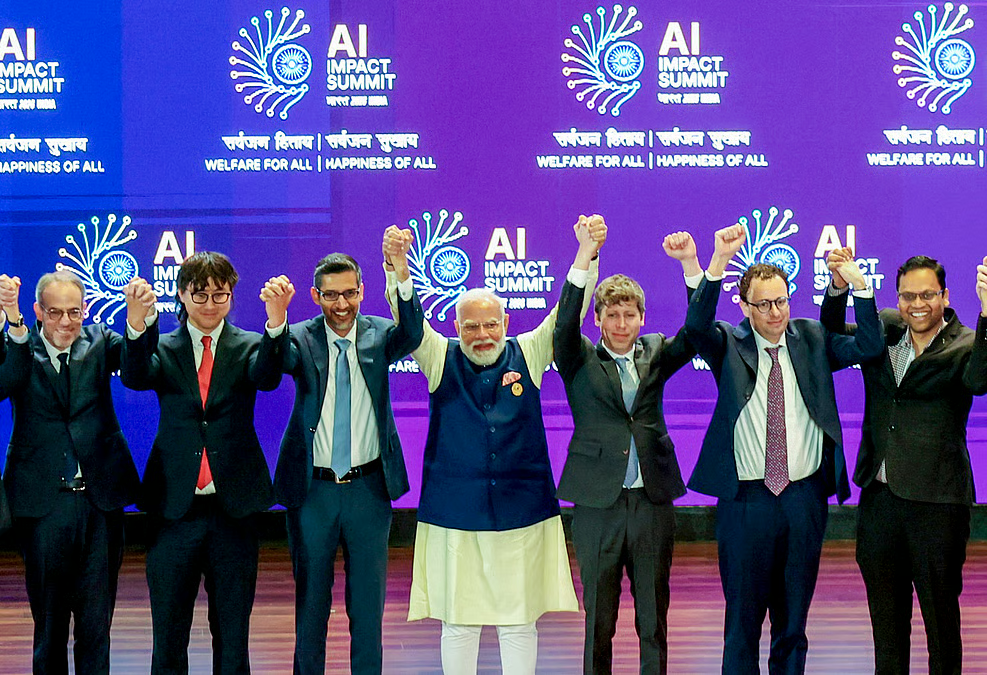
If there’s one non-Indian (okay, Indian but not anymore) star in this Summit it is clearly Sundar Pichai. Google already won by Sundar being here in person (okay Satya was there too but he didn’t stay for the hand holding moment pictured above). He gave the keynote address, had a solid one on one with PM Modi and was even leading when the India-US deal was advanced. He commented directly on India joining Pax Silica (India was invited last month, see TWITI #3 of 2026).
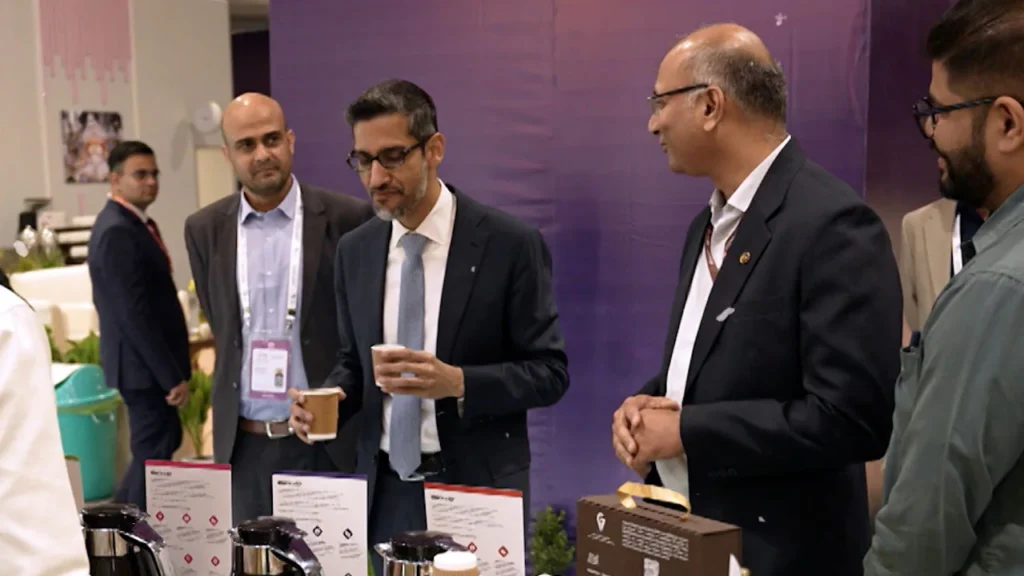
And he commented “wow” on tasting some GI coffee. This itself became a viral moment.
And it wasn’t just Sundar. Two other key Google figures – Demis Hassabis (see this documentary if you want) and Sriram Krishan were there too and made headlines.
As if on the side, Google reminded everyone of their $15bn investment in Vizag, and announced more subsea cables to be built from India as part of an America-India Connect initiative (which Sundar himself announced).
In collaboration with local partners, America-India Connect will establish a new international subsea gateway in Visakhapatnam (Vizag); three new subsea paths connecting India to Singapore, South Africa, and Australia; and four strategic fiber-optic routes that bolster network resilience and capacity between the United States, India, and multiple locations across the Southern Hemisphere. – Google
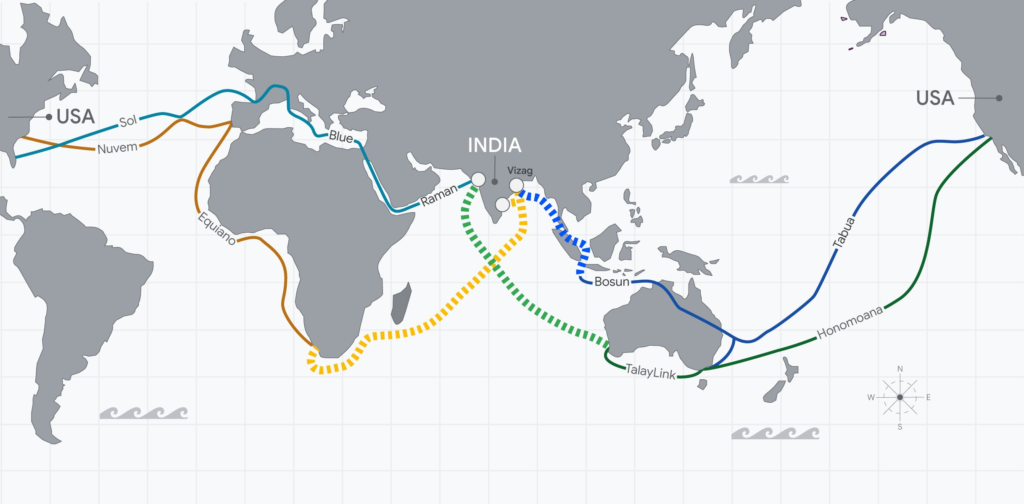
In case you’re wondering why this is such a big deal, subsea cables is how the internet works. Google is basically expanding internet access. This Initiative has both social and economic benefits. And of course, this will over time increase the adoption of AI (atleast that’s the hope).
Google also announced that Google Cloud is the cloud partner of Karmayogi Bharat (the Government of India’s digital mission) and is providing infrastructure for the iGOT (Integrated Government Online Training) Karmayogi platform. For this, I wish the Government went local.
Google also announced Google Center for Climate Technology on Manthan, the PSA’s (office of Principal Scientific Advisor to the Government of India) flagship platform for supporting India’s research and development ecosystem. For this also, I wish the Government went full local.
They also announced adding 336 MW of “clean energy to India’s grid” through local partnerships.
Google Deepmind specifically announced a new partnership with Indian government bodies and local institutions as part of its National Partnerships for AI. Google DeepMind, Google Research and Google.org are partnering with the Anusandhan National Research Foundation (ANRF) to facilitate the adoption of AI models to advance science. And at the Summit, Deepmind announced a $30m global “Google.org Impact Challenge: AI for Climate” which is “an open call for researchers, nonprofits, and social enterprises in India, and around the world, using AI to achieve scientific breakthroughs.” There are also specific tools being provided to the education and agriculture sector.
Here’s why I say that Google is winning the AI market in India (and arguably around the world). Yes, Google is uniquely placed to make these commitments and investments, and there is no doubt that these investments bring atleast some level of social good which can be seen even by the most skeptical big tech critics (i.e. me). But also, Google’s new AI-specific tools and infrastructure become more omnipresent, in a way that it is more difficult to get rid of them if in the future the Government wants to. It’s the classic infiltration strategy – come in for free and become so entrenched that it’s hard to be got rid of.
For each of the announcements that Google made, there is a local entity that could do the same thing. And of late, the Government has made it a point to favor locals and has in fact advertised it is local-first after praising the likes to Zoho and Sarvam. Despite this, for Google to make such a big impact at the Impact Summit is really a feat, and something to be studied.
Okay now let’s talk about a few local entities causing it.
Many Local Large Language Models (LLMs) Launched
At the Summit and on the sidelines, these entities announced the launch of their own LLMs. Many of which are crushing it on benchmark scores.
- Sarvam launches Saaras V3 and smart glasses. And Sarvam-30B and Sarvam-105B. “Designed for reasoning, multilingual communication, coding and enterprise use, the models aim to compete with global systems such as OpenAI’s GPT 4. Sarvam 30B powers “Vikram,” a multilingual chatbot that works even on feature phones, expanding AI access across Indian languages. The larger 105B model demonstrated enterprise grade reasoning by analysing company balance sheets in real time.
- Gnani.ai the local conversational AI firm introduced Vachana TTS (Text-to-Speech) a model capable of cloning voices across 12 Indian languages with less than 10 seconds of reference audio.
- BharatGen (which is IIT backed and is so far the biggest benefactor of the India AI Mission) launched Param2 17B MoE, which is a 17-billion-parameter multilingual foundational model. MoE stands for Mixture of Experts.
- Tech Mahindra announced project Indus, which is a Hindi-first Large Language Model (LLM) built with authentic Indian linguistic and cultural context for sovereign, scalable AI. Not sure what they mean by authentic Indian linguistic but whatever. They said it is powered by NVIDIA. The new LLM will debut as an educational model focused on democratizing high-quality learning.
This is all backed by the India AI mission – where the Government announced last year that the ₹10,000 crore outlay is partly for homegrown sovereign AI models.
Sarvam Announces Smart Glasses
And it’s called Sarvam Kaze. What an unfortunate name. Anyway, Sarvam announced they are hoping to bring their smart glasses to market in May this year, and said that developers will be able to more easily build for the glasses.
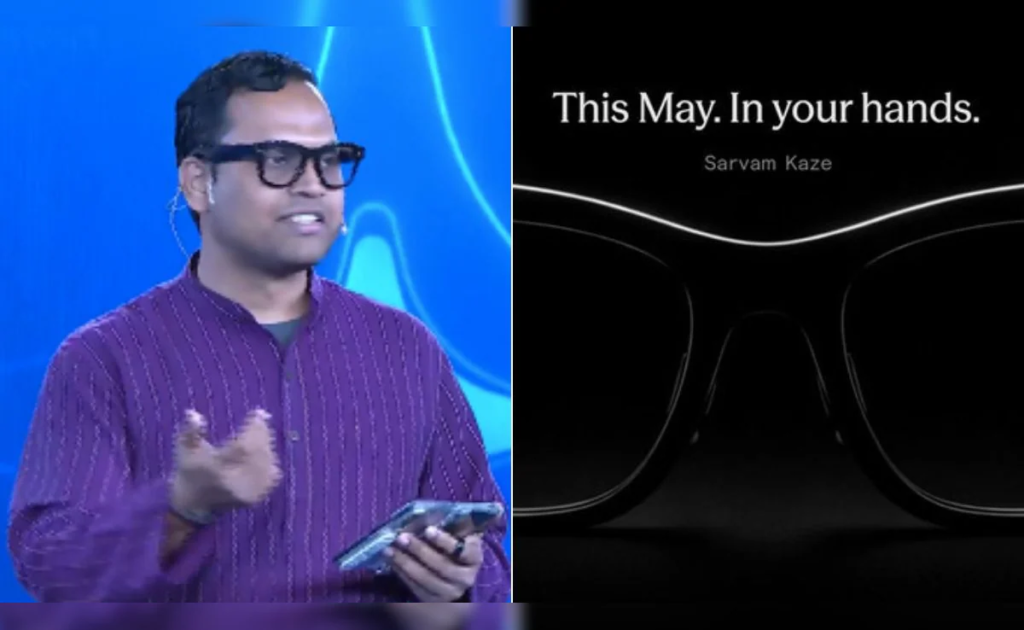
Sarvam also announced partnerships with HMD and Qualcomm and Bosch, basically to try and bring AI everywhere – to phones, wearables, and cars.
By the way, the long-back-announced Jio Frames were also showcased (for the first time) at the Summit. But no announcement of whether it will be commercially available.
Anthropic Opens Bangalore Office, Announces Partnerships
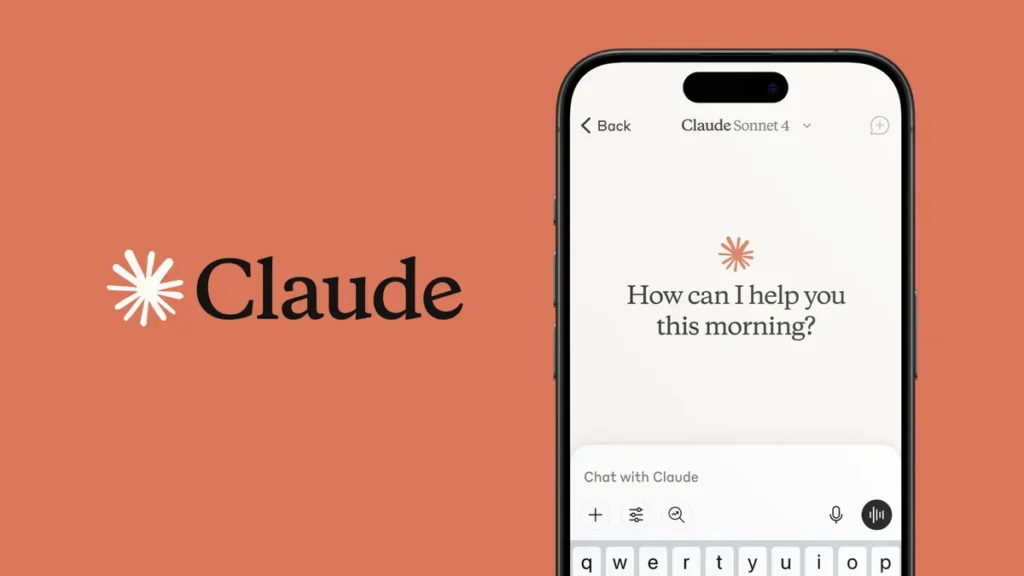
AI giant Anthropic announced it has officially opened its Bangalore office. In the same announcement, Anthropic revealed that Claude is India’s second-largest market.
Also in the same announcement, Anthropic announced partnerships with organizations like Karya, the Collective Intelligence Project, Digital Green, Adalat AI, CRED, Razorpay, Rocket, Emergent (I was surprised particularly with this one – Emergent is supposed to rival Claude Code), Pratham and many more. Basically to deploy Claude suite of tools to integrate with their platforms. Like Swiggy using Anthropic’s MCP to let you order via Claude or other AI chats (see TWITI #5 of 2026).
NVIDIA Partners With L&T and Others
In one announcement, it is said “NVIDIA is collaborating with next‑generation cloud providers Yotta, L&T and E2E Networks to deliver advanced AI factories to meet India’s growing need for AI compute and enable it to develop AI models and services that drive innovation.”
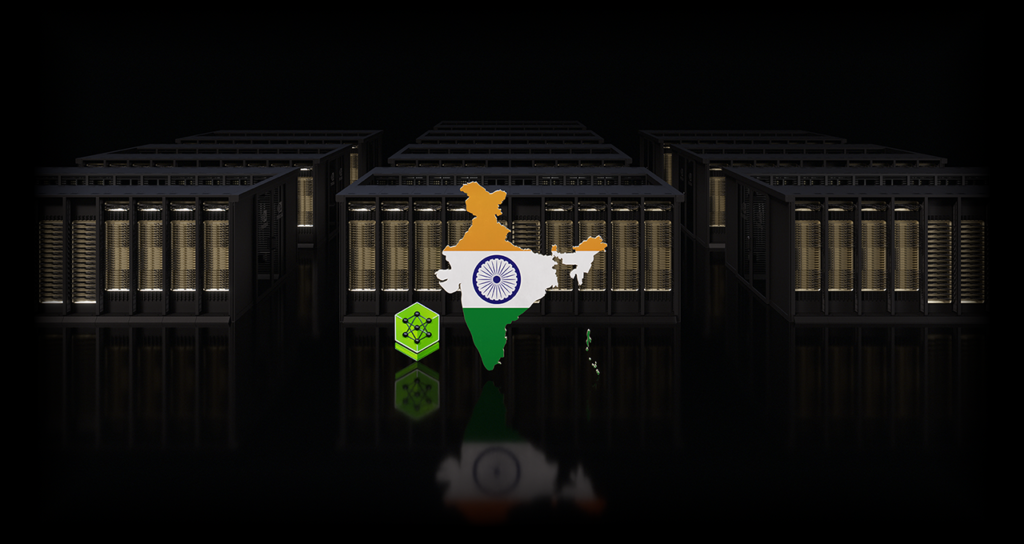
Out of these three entities the L&T partnership more hits home for me – literally, it’s about AI infrastructure (i.e. data centres) in Chennai and Mumbai.
NVIDIA also reminded us that the entities already mentioned above use NVIDIA chips – BharatGen, Sarvam, Tech Mahindra, Gnani, and more. Even NPCI.
Tata Group and OpenAI Announce Partnership
To build (wait for it) data centres.
This honestly feels like OpenAI and Tata were both feeling left out and decided to try and get some attention at the last minute. Tata was already committed to building a massive chip fab in Dholera (maybe that’s why they didn’t partner with NVIDIA, smart).
The announcement also stated that many Tata employees will use Enterprise ChatGPT, and some other OpenAI tools. I suspect that TCS will upsell OpenAI (either directly or build AI agents using ChatGPT) to enterprises.
Also, OpenAI will become the first customer of Tata Consultancy Services’ HyperVault data center business, beginning with 100 megawatts of capacity and with potential to scale to 1 gigawatt over time.
OpenAI will expand OpenAI Certifications in India, with TCS becoming the first participating organization outside the United States. “These certifications are designed to help professionals build practical AI skills that apply across roles and industries.”
OpenAI To Open New Offices in Mumbai and Bangalore
See? Didn’t want to get left behind.
OpenAI announced plans to open two new offices this year – one each in Mumbai and Bangalore. This will add to its Delhi office which it opened last year. Sam Altman’s announcement stated the launch of “OpenAI for India”. Not the most creative name but okay.
OpenAI Partners with JioHotstar to Launch ChatGPT-powered Content Discovery
Okay I did not expect this announcement. OpenAI is partnering with Reliance to add AI-powered conversational search to JioHotstar.
The feature, which is powered by OpenAI’s API, will let users search for movies, shows, and live sports using text and voice prompts in multiple languages, and receive recommendations based on their preferences and history.
Swiggy Shuts Down Snacc
Finally, a bit of news that’s not AI related.
Swiggy launched Snacc last year which was meant for 10-minute quick eats. Due to it not being profitable, Swiggy shut it down this week. That’s all.
Airtel Quietly Cancelled Perplexity Pro Benefit
Even for existing users. I checked – I don’t have access to Perplexity Pro anymore.
Tariff hikes might still be coming.
Fractal’s IPO Fully Subscribed – only Just
Fractal is a 20+ year old AI company (obviously they didn’t start with AI) that has several Fortune 500 clients. Their IPO coincided with Saasocalypse. They were fully subscribed by the final day of the IPO. That’s it, that’s the news – fractal jumped on the IPO bandwagon at the worst possible time.
That’s it for now! Don’t forget you can see the weekly TWITI video on by YouTube channel, or listen to the episode on Apple Podcasts, Spotify or wherever you get your podcasts. And if you’d like to receive the weekly news roundup directly to your inbox, subscribe to me on Substack. This is all free so share with a friend. See you next week!
[…] Bangalore is getting a lot of offices. Just last week, Anthropic opened its Bangalore Office and earlier Google signed a deal to rent more office space. […]
[…] when Google and Meta announce their massive fibre cable projects (Google did at the India AI Impact Summit), they are basically making the global internet more inter-connected. And making internet more […]
[…] Meanwhile, the central government is said to be seeking sovereign hosting for the Claude AI model in India, driven by jurisdiction, compliance, and national security concerns over foreign-hosted infrastructure used in sensitive areas like banking, telecom, and critical infrastructure. Anthropic also reportedly met with officials from the finance ministry, MeitY, and CERT-In about access to the Mythos model. Anthropic already have an office in Bangalore which opened in February 2026. […]