This Week in Tech India (TWITI) #7 of 2026
I’ve come to realize that the I only use AI to generate the thumbnails for my weekly TWITI video on YouTube. And from now, I will have to clearly label it thanks to today’s first bit of news.
New Government Rules on AI Generated Content for Social Media
When this was announced, a lot of creators thought this would be the AI-apocalypse. But it’s nowhere near that much hype. Let me very quickly and easily break it down.
As on 20th February 2026, AI generated content – that includes video, audio and images – fall under the amended India’s IT (Intermediary Guidelines and Digital Media Ethics Code) rules. Essentially, social media platforms (or any media platforms) must label all non-human generated content clearly and prominently as synthetically generated information. How prominently? Enough that users will be able to spot it instantly. Once in place, these labels should not be modified or removed. Content should also contain appropriate metadata and enough to trace back to source.
The Centre now has a clearer definition of what constitutes Synthetically Generated Information (SGI) – basically, content that looks realistic but is generated by AI. Heavily edited videos don’t fall under this definition, but will do so if it ‘distorts the original meaning’ of the video or audio.
The bulk of the burden falls under the social media platforms – Instagram, YouTube, Facebook, etc. In addition to self-declaration (where users will have to classify content as SGI or not), platforms will need to deploy tools to cross-verify this before the content goes live. The platform is accountable if it fails to label SGI as such.
Among the platforms I use, I know that YouTube already asks users to self-declare whether content is AI generated or not. But I’m not sure if it already has the tool to pick out AI generated content – if the user lies about it. In fact, last month YouTube’s CEO Neil Mohan casually remarked that “AI is the future of YouTube” and introduced native AI video generation and editing tools in the YouTube app itself.
But clearly this rule is primarily targeting deepfakes. Or brain rot.
Another significant change in the rules for the platforms is they have a lot less time to act on legal orders – 3 hours now instead of 36 hours. Platforms must also warn users regularly about the dangers of misusing AI.
Nothing’s First India Store (and second globally) Opens in Bangalore
Global phone giant Nothing opened its reasonably-long awaited flagship store in Bangalore – which is only its second flagship physical store globally.
Nothing CEO Carl Pei put out this really nice video on his IG – which kinda explains why Nothing is moving towards flagship physical stores even though you can buy a Nothing product almost anywhere these days.
They included a content creation studio – including an arm specifically to make unboxing videos – in the store. Genius.
Flipkart Reportedly Mulls Entry Into Food Delivery Segment
The Economic Times reported that Flipkart is exploring the idea of entering food delivery. The Times’ source stated that Flipkart will have a pilot in May-June 2026.
I don’t see any reason why Flipkart should not enter food delivery, especially if it has a differentiating factor. And that differentiating factor may be taking more care of its riders / delivery partners, so they don’t need to go on strike to draw attention to their rights.
Two reminders – Flipkart is planning to go public later this year, and is in the process of…. becoming an Indian company (see TWITI #51 of 2025).
Gujrat Signs with Starlink for Satcom Services
I’ll admit I was confused with this bit of news at first.
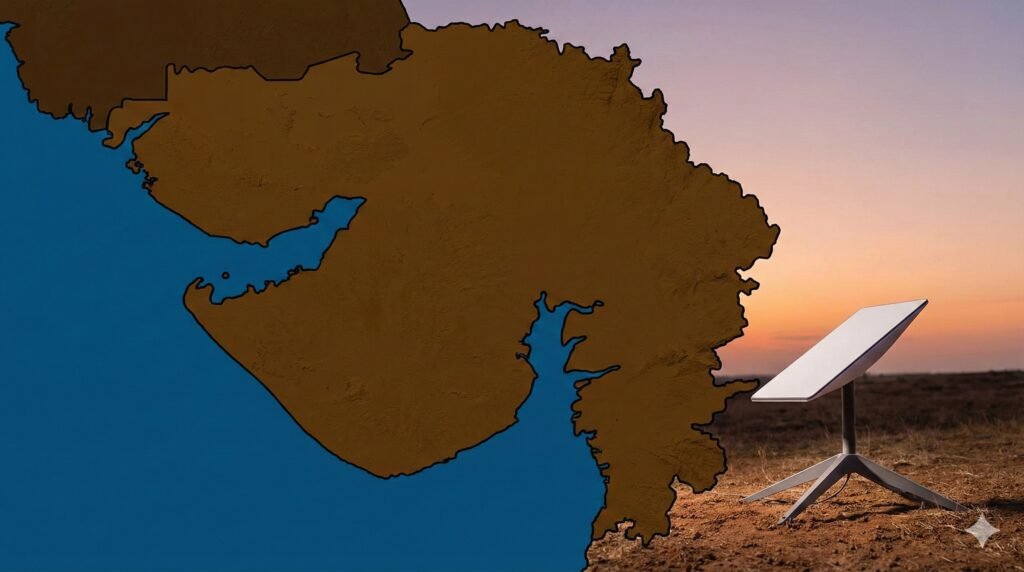
The State of Gujarat signed a Letter of Intent (LoI) with Starlink, the Musk-owned satellite internet company that said they “will launch in India” for more than a year now. (it even “leaked” its subscription price, see TWITI #50 of 2025).
The Gujarat Government said “The initiative aims to provide reliable, high-speed satellite-based internet to Gujarat’s most remote, tribal, and border regions, where traditional telecom infrastructure faces geographical challenges.”
And, “A Joint Working Group comprising state officials and Starlink representatives will be formed to oversee the capacity building of disaster management teams and the integration of robust digital networks across all district control rooms.”
Not because it is Elon or crazy expensive, I still am very skeptical of what problems Starlink will solve in India. See this blog post I wrote in May 2025.
Startup India FoF Second Phase Approved
PM Modi approves the second wave of the Startup India Fund of Fund scheme with an outlay of ₹10,000 crores. The fund of funds scheme was first launched by the Union Government in 2016 under the Startup India action plan, with an initial corpus of ₹10,000 crores. The Small Industries Development Bank of India (SIDBI) manages the operational aspects of the FoF under the oversight of the Department for Promotion of Industry and Internal Trade (DPIIT). So I guess you need to contact SIDBI if you want money from this fund.
IIT Madras and Unicorn India Ventures Launch a Deeptech Focussed Fund
Deep tech (or deep technology) refers to companies and innovations rooted in substantial scientific discovery or advanced engineering, designed to solve complex, global challenges. These technologies are characterized by high technical risk, long R&D, and significant capital investment. Key areas include AI, quantum computing, biotechnology, robotics, and clean energy.
Basically, tech that goes deep.
Anyway, Unicorn India Ventures and IIT Madras have together launched a 600 crore fund for deep tech startups. There is also a 400 crore green shoe option, aimed at backing IP-led early stage startups in strategic sectors.
CCI Fines Intel for Discriminatory Practices
The Competition Commission of India (CCI) fined American chip giant Intel $3m for what it called discriminatory practices. Under its warranty policy on boxed microprocessors for India (amended in 2016), Intel had removed the option for consumers to avail warranty benefits unless the product was purchased from an authorised dealer in India. Which meant if you bought a chip outside India and needed to avail a warranty benefit in India – you could not. This is very obviously a discriminatory practice.
UPI Now Works in Malaysia
Malaysia is the latest country where UPI will now work. This is thanks to an agreement between India’s NPCI and Payments Network Malaysia (PayNet). This will allow UPI to operate through DuitNow QR, Malaysia’s national QR code standard.
Malaysia becomes the 10th country outside India where UPI now works – after Bhutan, Singapore, UAE, Nepal, Mauritius, Sri Lanka, France, Cyprus and Qatar. And, pilots in-progress for Japan, UK, Russia and Oman. Nice.
GoBoult is Going the IPO Route
If you have ever opened the earphones section of Amazon India, you would have definitely seen many product listings from this brand:
After boAt, Boult (or GoBoult) is arguably the darling of the Indian audio hardware industry. And in news that has surprised no one, they are heading for an IPO, maybe later this year. Cool.
That’s it for now! Don’t forget you can see the weekly TWITI video on by YouTube channel, or listen to the episode on Apple Podcasts, Spotify or wherever you get your podcasts. And if you’d like to receive the weekly news roundup directly to your inbox, subscribe to me on Substack. This is all free so share with a friend. See you next week!